Key Won't Turn in Ignition? What Every Driver Should Know Before Calling a Locksmith
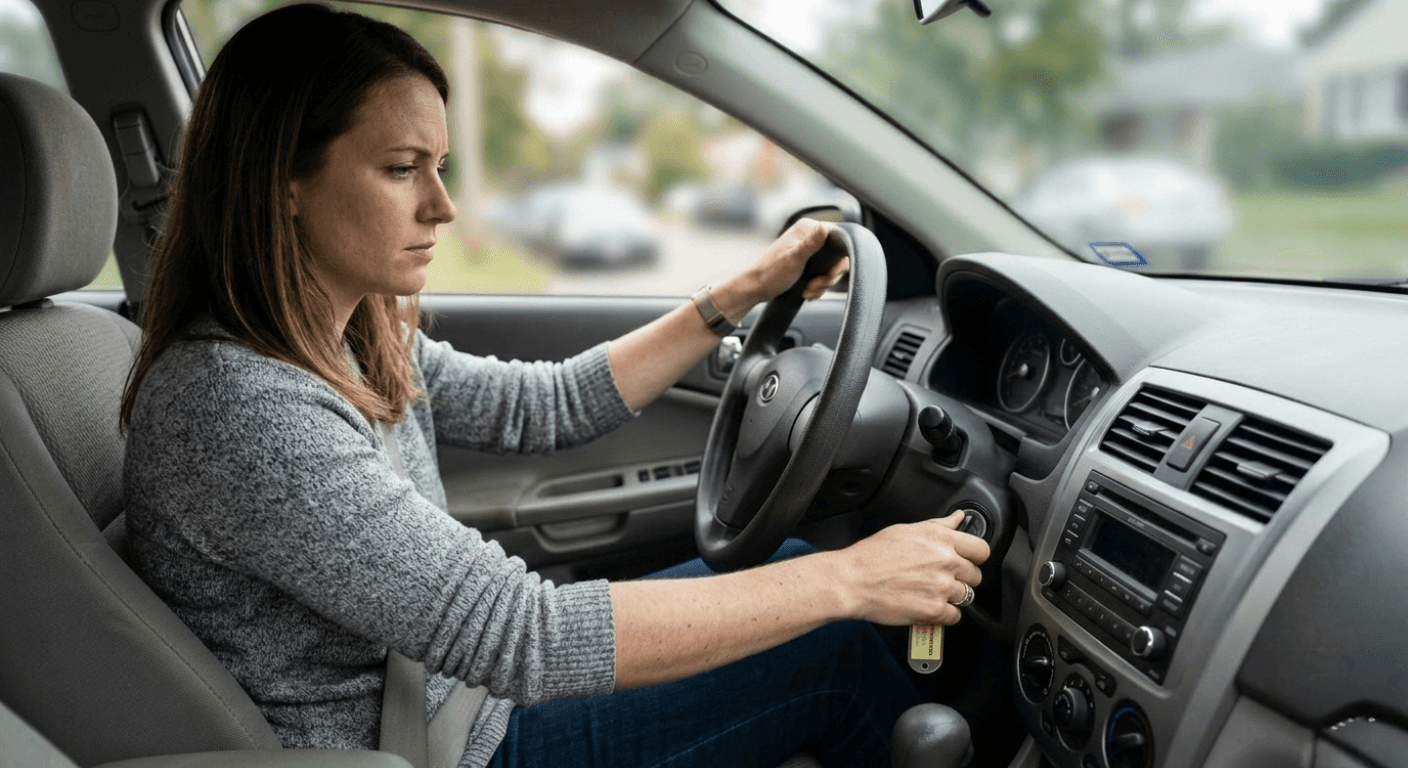
A close-up editorial photograph of a driver's hand attempting to turn a car key in an ignition cylinder, with soft dashboard lighting and a subtle out-of-focus mobile phone visible in the background suggesting an impending call for help. Clean, professional, slightly tense mood with warm interior tones.
24/7 LIVE DISPATCHING
Every missed call is a missed job.
Our human dispatchers answer for you around the clock.
Introduction: A $2.9 Billion Industry Built on Moments of Urgency
In 2024, AAA responded to over 27 million emergency roadside service calls across the United States — and 10% of those calls were attributable to vehicle lockouts. When a key won't turn in the ignition, a driver's next decision — who to call and how quickly that call is answered — determines not just the speed of the resolution but the quality and cost of the service they receive.[1][2]
The U.S. locksmith services industry generated $2.9 billion in revenue in 2025, with 29,304 businesses operating nationally. Yet the Federal Trade Commission (FTC) has issued specific warnings about fraudulent locksmith operations that exploit exactly these emergency moments — companies using local phone numbers that route to distant call centers, dispatching untrained individuals who overcharge stranded drivers. For locksmith SMBs serving the East Coast, this convergence of high demand and low consumer trust creates both a threat and a strategic opportunity.[3][4]
This article examines the research behind automotive key and ignition failures, the documented economics of emergency locksmith services, and why the first point of contact — the phone call itself — is the most consequential variable in converting a stranded driver into a satisfied, fairly-served customer.
Why Keys Fail: The Technology Behind the Problem
Modern automotive keys are not simple metal tools. Since the introduction of the first transponder key in 1995, vehicles have increasingly relied on electronic immobilizer systems requiring a key's embedded microchip to communicate with the vehicle's Engine Control Unit (ECU) before the engine starts. The transponder key segment now accounts for approximately 91.8% of the automotive key market by product type.[3]
This technological complexity is what makes "key won't turn in ignition" a search term with 2,900 monthly queries and a $1.93 cost-per-click — the highest CPC in the locksmith keyword cluster, signaling intense commercial intent. When a key won't turn, the cause typically falls into one of several categories:[3]
Worn key or ignition cylinder wafers: Over time, both the key's cut pattern and the internal wafers of the ignition cylinder degrade, creating misalignment that prevents rotation[5][6]
Steering wheel lock engagement: A safety feature designed to prevent theft can inadvertently lock the ignition cylinder when the wheel is turned sharply with the engine off[6]
Transponder chip failure: The embedded RFID chip can lose its programming or fail to communicate with the ECU, preventing the immobilizer from authorizing ignition[3]
Dead key fob battery: For push-to-start vehicles, a depleted fob battery can prevent the vehicle from recognizing the key's presence entirely[7]
Shift-lock or electronic interlock malfunction: Certain vehicles require the transmission to be fully in Park before the key will release or turn; sensor failures can misreport the gear position[8]
According to AAA, approximately 1 in 5 drivers encounter key fob failure every year. The average U.S. vehicle age reached 12.8 years in 2025, with passenger cars averaging 14.5 years — meaning the majority of vehicles on the road are well into the age range where ignition wear, transponder degradation, and electronic malfunctions become increasingly common.[9][3]
Over 110 million vehicles sit in the 6–14-year "prime aftermarket service" window
This segment is projected to reach 40% of the total fleet by 2028
These are vehicles past the warranty period where owners increasingly turn to aftermarket providers rather than dealerships
The convergence of aging vehicle fleets and increasingly complex key technology means that ignition-related emergencies are not declining — they are structurally embedded in the market.
||| When a driver's key won't turn, they need a live answer within seconds — not a voicemail. For locksmith businesses handling emergency calls, a structured human answering layer ensures every urgent inquiry is captured and dispatched immediately. See how KeyDispatchers handles emergency locksmith call routing → |||
The Scam Problem: Why the FTC Warns Drivers About Locksmith Fraud
The moment a driver searches "key won't turn in ignition" and makes a phone call is precisely when they are most vulnerable to fraud. The Federal Trade Commission has documented a specific pattern of predatory locksmith operations:[4]
Companies operating far from the customer's location choose business names similar to legitimate local locksmiths
They advertise using local phone numbers and addresses, but calls route to a centralized call center in another city
A price is quoted on the phone — typically around $45 for a car opening — but when the individual arrives, often in an unmarked vehicle, the charge escalates to $135–$150 or more
The person dispatched frequently lacks professional locksmith training
According to the Associated Locksmiths of America (ALOA), these operations have proliferated through online search results and business directories. ALOA has documented cases of elderly consumers being charged $900 to $1,700 to replace a $12 lock. The organization maintains a consumer complaint portal directing victims to file reports with both the FTC and state Attorneys General.[10]
The documented scam pattern exploits three specific consumer vulnerabilities:
Urgency suppresses due diligence. A driver stranded with a non-turning ignition is in an acute problem state and will often call the first number that appears in search results.
"Local" presence is easily fabricated online. Some fraudulent companies maintain 30 or more separate listings in a single phone book or search engine, all routing to the same distant call center.[11][4]
Cash-only demands and unmarked vehicles prevent consumers from having a paper trail or recourse after overpayment.[4]
What Legitimate Locksmith Service Looks Like
The contrast between a fraudulent operation and a certified locksmith is measurable across multiple dimensions:
Factor
Fraudulent Operation (FTC-Documented)
Certified Automotive Locksmith
Phone response
Generic "locksmith services" greeting[4]
Business answers with specific company name
Pricing
Low phone quote; escalated on-site[10]
Transparent upfront pricing before dispatch
Arrival
Unmarked vehicle; no identification[4]
Marked vehicle; presents license/credentials
Certification
None; untrained individual[4]
ALOA CAL or CMAL certified[3]
Service capability
May drill or replace lock unnecessarily[12]
Diagnoses and repairs without unnecessary damage
Payment
Cash only; no invoice[4]
Multiple payment options; documented receipt
Service time
Variable; often prolonged
20–60 minutes for transponder key work[3]
For locksmith SMBs, this data reveals a straightforward competitive advantage: the businesses that can demonstrate legitimacy — from the first phone interaction through service completion — capture the customers that scam operations lose through poor execution and consumer complaints.
The Economics of Emergency Key Failures for Locksmith SMBs
The financial dimension of ignition and key failures is substantial. Every instance where a key won't turn in the ignition represents an immediate service opportunity with high willingness to pay.
Revenue Per Emergency Call
Based on the research dossier's industry pricing data:[3]
Transponder key replacement (the most common fix when a key won't turn due to chip failure or worn key): $75–$150 at a certified locksmith, versus $125–$250+ at a dealership
Ignition cylinder repair or replacement: Typically $100–$250 for a locksmith on-site service
Smart key / proximity fob replacement: $150–$300 at a certified locksmith, versus $200–$600+ at a dealership
A locksmith SMB handling an average of 3–5 emergency ignition or key failure calls per week generates $375–$1,250 in weekly revenue from this service category alone. Annually, that represents $19,500–$65,000 — revenue that depends entirely on whether the phone is answered when the customer calls.
The Dealership Alternative Is Structurally Slower
When a driver's key won't turn, the dealership option is functionally impractical for most consumers. The J.D. Power 2025 CSI Study documents that mass-market vehicle owners waited an average of 5.2 days for a dealer service appointment, with premium owners waiting 5.4 days. The study confirms that appointment wait times remain "longer than was tracked from 2018 to 2022".[13][14]
A driver stranded with a non-functioning ignition cannot wait 5 days. This structural mismatch between dealership capacity and emergency service demand is why the locksmith model exists — and why the speed of initial response is the primary conversion variable.
Dealership share of the vehicle service market fell to 29% — down from 41% in 2018
Only 54% of owners with cars two years old or newer returned to the selling dealership for service, down from 72% in 2023
Independent service providers have surpassed dealerships as the most preferred option (33% vs. 31%)
The "key won't turn in ignition" moment is where this market shift is most visible. The consumer cannot wait, the dealership cannot respond in the required timeframe, and the locksmith who answers the phone captures the job.
||| Emergency locksmith calls have the highest conversion potential — but only if answered live. Locksmith SMBs that route after-hours and overflow calls to a trained human dispatch service protect revenue that voicemail loses permanently. Explore KeyDispatchers' 24/7 locksmith answering model → |||
Why the First Phone Call Determines Everything
The research data from the DeepSearch dossier identifies a critical insight: the consumer pain points driving dissatisfaction with automotive service providers are fundamentally about communication and trust — not technical capability.[3]
45% of dealership customers cite dissatisfaction with "surprise costs and poor communication"
Four of the study's ten most influential key performance indicators are communication-related: "completely focusing on customer needs," "keeping the customer informed," "service advisor immediately meeting with customer," and "post-service follow-up"
Consumer trust in service personnel varies by generation, with Gen Z expressing significantly less trust (5.77 out of 7) than Boomers (6.24 out of 7)
For a driver whose key won't turn in the ignition, the phone call is the entire service experience until the technician arrives. What happens in that call determines:
Whether the customer books at all — a voicemail or automated system in an emergency moment drives the caller to the next search result
Whether the customer trusts the price — transparent, upfront quoting over the phone directly counters the FTC-documented scam pattern of low phone quotes and on-site escalation[4]
Whether the customer perceives legitimacy — a trained human agent who can explain the transponder programming process, confirm ALOA certification, and provide a clear ETA builds the trust that an automated system cannot
The Communication Gap in Emergency Locksmith Services
The IMR Automotive Aftermarket Research (2025) found that 91% of repair shops report heightened consumer price sensitivity, and 87% observe increased demand for entry-level or low-cost parts. When a consumer is price-sensitive and in an emergency, the combination of transparent pricing and immediate human response is the highest-converting call handling model available.[16]
The dossier research identifies that 43% of automotive consumers are now willing to switch brands for a lower price. For locksmith SMBs, this means that a well-handled phone call — quoting $75–$150 for a transponder key replacement versus the $125–$250+ a dealership would charge — is a direct conversion tool. But only if a live human delivers that quote at the moment the customer calls.[3]
East Coast Emergency Demand: Regional Data
Several indicators from the research dossier point to elevated emergency locksmith demand in East Coast markets specifically:[3]
Washington, D.C. has the highest vehicle theft rate nationally at 842.4 thefts per 100,000 residents — more than three times the national average of 250.2. High theft rates correlate with higher demand for rekeying, ignition replacement, and transponder reprogramming services.[3]
New York City has experienced what researchers describe as an "unprecedented boom" in locksmith services, driven by security concerns, high tenant turnover, and smart lock adoption.[3]
BLS employment data shows locksmith employment concentrated in metropolitan areas, with the "Investigation and Security Services" subsector accounting for 10,200 of the 14,790 national total — and East Coast metro areas well represented in employment density.[3]
The population density, vehicle concentration, and elevated crime rates in East Coast urban corridors create a structurally higher frequency of key emergencies per capita than national averages. For locksmith SMBs operating in these markets, the volume of "key won't turn in ignition" calls is correspondingly higher — making call handling infrastructure a direct revenue multiplier.
||| East Coast locksmith operators handling high emergency call volumes face a specific challenge: calls peak outside business hours when staffing is lightest. A human answering service designed for locksmith dispatch ensures no emergency call goes to voicemail during nights, weekends, or holidays. Learn how KeyDispatchers supports East Coast locksmith operations → |||
The Trust Infrastructure: How Human Dispatch Counters a Scam-Saturated Market
The strategic opportunity identified across the research data is not about technology or pricing alone — it is about trust infrastructure. The FTC's documented warnings, the ALOA's consumer complaint records, and the J.D. Power communication findings all point to the same conclusion: in an industry where fraud is well-documented and consumer trust is measurably declining across generations, the businesses that invest in transparent, human-first customer interaction capture disproportionate market share.[10][14][4]
Five research-supported factors converge to define this opportunity:
The emergency context demands immediate human response. A driver whose key won't turn cannot navigate an IVR menu or leave a voicemail. The call is answered live, or the customer moves to the next option.[3]
Transparent pricing on the first call neutralizes the scam narrative. When a trained agent quotes $75–$150 for transponder key service and explains what the charge includes, it directly contrasts with the FTC-documented pattern of $45 phone quotes that become $150 on-site.[4][3]
Certification verification builds instant credibility. An agent who can confirm ALOA CAL/CMAL certification and explain the transponder programming process demonstrates legitimacy before the technician arrives.[3]
Speed-to-dispatch is a measurable competitive advantage. Mobile on-site service in 20–60 minutes versus a 5.2-day dealer wait time converts the emergency into a completed job within the hour.[14][3]
Generational trust gaps require active trust-building. With Gen Z consumers scoring service trust at 5.77 out of 7 — significantly below Boomers at 6.24 — the businesses that proactively demonstrate credibility during the first interaction gain an advantage that compounds with demographic shifts.[14]
The Revenue Protection Equation
The economics reduce to a simple model. The "key won't turn in ignition" keyword cluster represents 4,500+ monthly searches (2,900 for the primary term plus 1,600 for "car key won't turn"). These are users in an acute emergency state with the highest commercial intent in the locksmith keyword ecosystem — reflected in the $1.93 CPC, the highest in the cluster.[3]
Each of these searches represents a potential $75–$300 service call. A locksmith SMB that captures even a small share of this search demand through authoritative content and answers every resulting call with a trained human agent is protecting recoverable revenue that voicemail, automated systems, or missed calls permanently forfeit.
Motor vehicle maintenance and repair costs have risen 15% year-over-year as of August 2025 — the largest single-month increase on record. In this environment, consumers are simultaneously more price-sensitive and more likely to seek alternatives to dealership service. The locksmith that answers the phone, quotes a transparent price, and dispatches a certified technician within minutes occupies the intersection of every trend the research identifies.[3]
||| For locksmith SMBs, the data supports a clear operational conclusion: emergency call handling is not a cost center — it is the primary revenue conversion mechanism. A dedicated human dispatch service structured around locksmith workflows converts stranded drivers into completed jobs at a rate that automated alternatives cannot match. Request a KeyDispatchers consultation → |||
Sources referenced in this article include industry data from AAA, the Federal Trade Commission, the Associated Locksmiths of America, J.D. Power, Cox Automotive, S&P Global Mobility, IMR Automotive Aftermarket Research, the Bureau of Labor Statistics, and the National Insurance Crime Bureau. Academic research cited includes the van Ours & Vollaard study on engine immobilizers published in the Economic Journal (Tilburg University, 2016).